Family Bonding Pack: Easy At-Home & Outdoor Activities
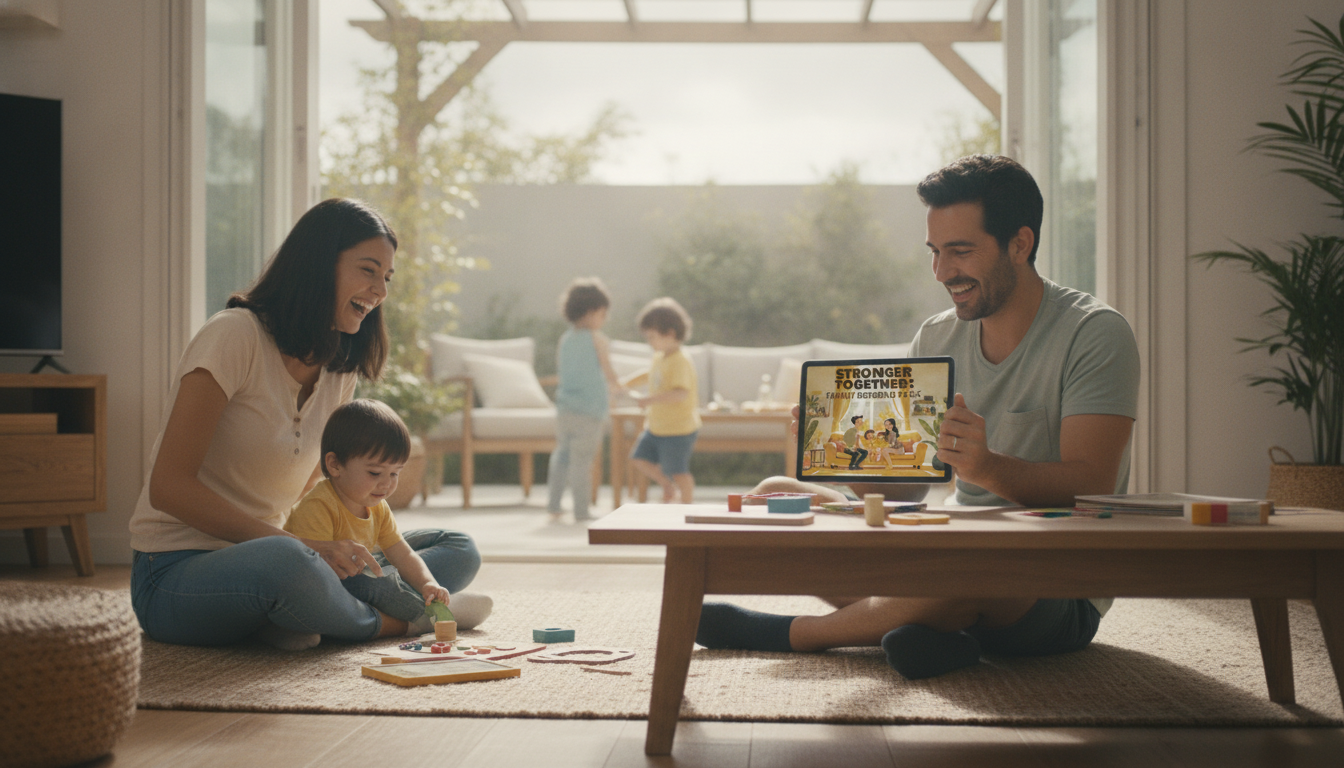
Stronger Together: A Simple Family Bonding Pack for Meaningful Time at Home and Outside
Busy schedules, devices, and everyday stress can make family time feel rushed. The good news: connection doesn’t require a perfect plan or a full free Saturday. A simple digital bonding pack with printable, kid-friendly activities and an easy checklist can help families create small, repeatable moments—at the kitchen table, in the backyard, or on a walk around the block.
What the Stronger Together Family Bonding Pack Includes
Designed to be used by kids and parents together, Stronger Together: Family Bonding Pack is a digital download you can print and reuse. It’s built for real life: low-prep, flexible, and easy to repeat without feeling repetitive.
- Digital download made for parents and kids to do side-by-side
- Printable activities for both at-home and outdoor connection
- A family time checklist that keeps momentum without constant reminders
- Flexible format: choose one activity, build a routine, or mix-and-match by mood and time
- Easy to adjust for different ages by assigning roles (leader/helper/recorder)
Why Micro-Moments Matter More Than Perfect Plans
Short, consistent interactions build trust over time. When kids experience steady, warm attention—especially during everyday transitions—they’re more likely to share what’s really going on (not just “fine”). Research-backed parenting frameworks often highlight responsive back-and-forth interactions as foundational for healthy development, sometimes described as “serve and return.” For a deeper explanation, see Harvard University’s Center on the Developing Child: Serve and Return.
- Small daily moments can build emotional safety without a big production
- Predictable rituals (even 10 minutes) lower decision fatigue and reduce transition conflict
- Shared attention—no multitasking—often matters more than the activity itself
- A checklist supports follow-through without turning connection into a chore
- Outdoor options add movement and novelty, which can make talking easier for some kids
If you want additional age-specific parenting communication tips, the American Academy of Pediatrics Positive Parenting Tips and the CDC Essentials for Parenting are practical, trustworthy references.
At-Home Connection Activities (Low Prep, High Payoff)
At-home bonding works best when it feels doable on an average weekday. The simplest structure is: start with one prompt, do one shared action, end with one appreciation.
- Conversation starters that invite stories: “Tell me about a time you felt proud today,” “What’s a favorite memory from this year?” or “What’s something you wish grown-ups understood?”
- Team challenges with household items: build the tallest tower from cups, sort a “mystery bin” by color/category, or plan a pretend party together (menu, music, decorations).
- Creative sessions where everyone contributes: a family playlist (one song each), a collage from old magazines, or gratitude notes for each other.
- Calm-down bonding for hard days: a short read-aloud, guided breathing, “high/low” check-ins, or a quiet craft where talking is optional.
- Role-based options for mixed ages: younger kids choose colors/props, older kids lead instructions, adults keep the pace and model respectful listening.
Outdoor Connection Activities (Movement + Conversation)
Side-by-side conversation can feel less intense than face-to-face, especially for kids who struggle to open up when they feel “put on the spot.” Outdoor activities also offer built-in breaks, shared observations, and sensory variety.
A 7-Day Family Connection Plan (Mix-and-Match)
Sample Week Using Printable Activities
| Day | Time Needed | At-Home Option | Outdoor Option | Simple Wrap-Up |
|---|---|---|---|---|
| Mon | 10–15 min | High/Low check-in + short prompt | Walk-and-talk around the block | One appreciation each |
| Tue | 15–20 min | Team challenge with household items | Scavenger hunt (5 finds) | Pick tomorrow’s activity |
| Wed | 10 min | Family playlist: 1 song each | Cloud/sky spotting chat | Name one good moment |
| Thu | 15 min | Creative prompt (draw a shared memory) | Photo walk: 3 pictures to share | Show-and-tell |
| Fri | 20 min | Family game night (co-op rules) | Park mission: 3 kindness acts | Celebrate the week |
| Sat | 30–60 min | Cook or snack-build together | Mini-adventure to a local spot | Family recap question |
| Sun | 10–20 min | Plan the week with checklist | Stretch + short walk | Choose one goal together |
How to Use the Checklist Without Turning It Into Pressure
Who This Pack Works Best For (and How to Adapt It)
Getting Started in 10 Minutes
For families also building smoother home routines and communication skills, Essential Adult Skills Guide can pair well with connection habits—especially when you want practical systems that reduce daily friction.
FAQ
What fun activities did you explore to strengthen your bond with your family?
Try a mix of at-home and outdoor options: high/low check-ins plus appreciation, cooperative “build it together” challenges, quick creative projects like a family playlist, walk-and-talk prompts around the block, and simple scavenger hunts focused on noticing instead of winning.
What age range are the activities best for?
The activities can scale for preschool through preteen (and beyond) by adjusting prompts and roles: younger kids can point, draw, or choose from options, older kids can lead directions or write/journal, and adults can facilitate timing and turn-taking for mixed ages.
How often should a family do bonding activities for it to feel effective?
Consistency matters more than duration. Ten to twenty minutes most days works well, with a “minimum version” on busy days and a longer session on weekends when it naturally fits.











Leave a comment